
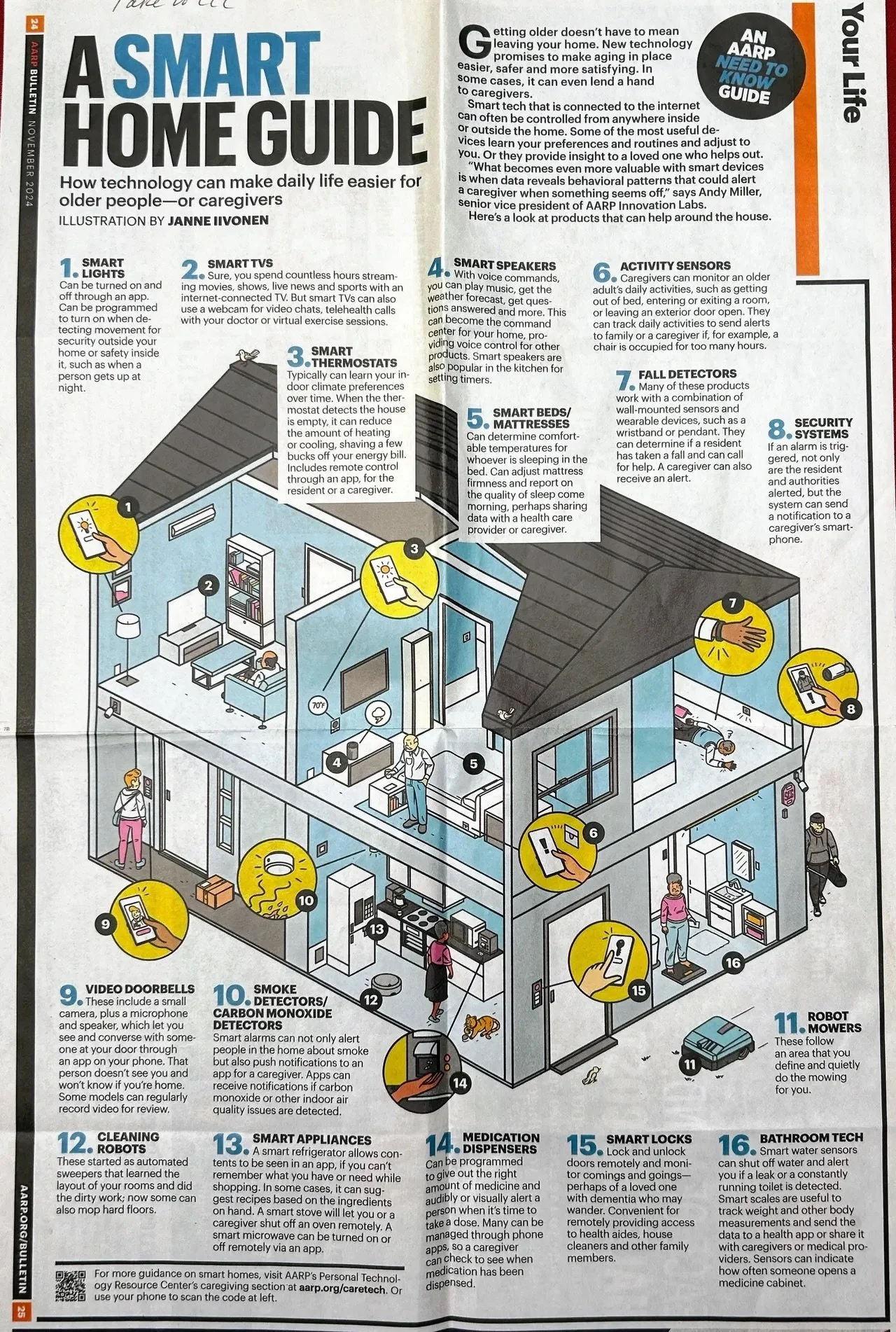
There's this moment that happens to a lot of us - when you realize your parents aren't just getting older, they're becoming vulnerable in ways that keep you up at night. For my sister, that moment arrived when she had to sleep in the guest bedroom downstairs for a couple of nights instead of her own bed upstairs. Why? Because our parents live in a two-story home, and when either of them isn't feeling well, she needs to be close enough to hear if they call out in the night.
It's a reality that millions of family caregivers know all too well. You want your loved ones to maintain their independence and age at home - it's what they want too - but safety concerns don't take a night off.
The Smart Home Promise (and its Limitations)
I recently came across AARP's comprehensive guide on smart home technology for older adults, and honestly, it's both inspiring and overwhelming. The guide showcases everything from smart speakers and fall detectors to video doorbells and medication dispensers - a whole ecosystem designed to help seniors continue to maintain independence while giving caregivers peace of mind.
But here's what struck me: my sister's situation is pretty common, yet I struggled to find an affordable, unobtrusive solution. She needs something that can pick up faint sounds from my parents' room without requiring them to actively call for help. Something that can wake her up without disturbing her husband sleeping next to her.
Yes, you can set up Alexa devices in multiple rooms and use the "Drop In" feature as an intercom system. But what if you're looking for a cheaper option? What if, like many rural families, you don't even have reliable internet at home?
When "Smart" Isn't Always the Answer
Here's a reality check: smart home technology often assumes you have robust WiFi, smartphones everyone knows how to use, and the budget for multiple connected devices. For many families caring for aging loved ones, especially in rural areas, that's just not the reality.
If you're in this situation, getting internet installed might actually be your first practical step. Many providers now offer senior discounts or low-income options. It's not the sexy tech solution, but connectivity opens doors to telemedicine, video calls with family, and yes, those safety monitoring systems.
For the wifi-enabled walkie-talkie problem my sister faces, even simpler solutions exist: baby monitors (yes, really), two-way radios that don't need internet, or even a basic bell system can work until you find the right tech fit.
Innovation That Actually Matters
While big tech companies are racing to sell us the latest gadgets, some of the most exciting breakthroughs are happening in research labs with real-world applications in mind.
At UW-Madison, researcher Kevin Ponto and his team are working on the ARHAT project — an Augmented Reality Home Assessment Tool. It uses LiDAR sensors already built into newer iPhones to conduct rapid, accurate home safety assessments. Social workers and occupational therapists visiting seniors' homes can now identify fall risks and accessibility issues in minutes rather than hours, using nothing more than a smartphone camera.
Think about that: the same technology that helps your iPhone take portrait photos could help identify the loose carpet that's been a tripping hazard in your mom's hallway for years.
Other innovations, like KamiCare's AI-powered fall detection systems, are bringing professional-grade monitoring capabilities into homes at increasingly accessible price points. The technology is getting better at distinguishing between an actual fall and simply bending down to pick something up - which means fewer false alarms and more reliable safety monitoring.
Practical Steps You Can Take Now
Whether you're tech-savvy or tech-skeptical, here are some actionable ways to improve safety for aging loved ones at home:
Start with a walkthrough: Before buying any technology, physically walk through the home looking for hazards. Trip risks, poor lighting, and hard-to-reach items cause more problems than most high-tech gadgets can solve.
Prioritize communication: Whatever solution you choose—whether it's a $200 smart speaker system or a $20 baby monitor—make sure your loved one actually knows how to use it and will use it. The best technology is the one that gets used.
Consider offline backups: Power outages and internet failures happen. Keep a charged cell phone, flashlight, and basic medical supplies accessible. Sometimes old-school solutions are the most reliable.
Test everything regularly: That fall detector or emergency alert system? Test it monthly. Technology fails, batteries die, and subscription services lapse.
Connect with professionals: Occupational therapists, geriatric care managers, and social workers often know about local resources and emerging technologies before they hit mainstream awareness.
📋 SIDEBAR: Room-by-Room Safety Checklist
Choosing or Modifying a Home:
Avoid sunken living rooms (tripping hazard at night)
Ensure doorways are at least 32" wide for wheelchair access
At least one no-step entrance or gentle ramp
Single-story or main-floor bedroom/bathroom preferred
Think "10 years from now" when making decisions
Bathroom (Where Most Falls Happen):
Grab bars near toilet and in shower
Non-slip mats
Shower chair or bench
Walk-in shower preferred over tub
Lighting:
Motion-sensor nightlights in hallways and bathrooms
Under-cabinet lighting in kitchen
Remove need to fumble for switches in the dark
Stairs:
Sturdy handrails on both sides
Consider chair lift or converting first-floor room to bedroom
Kitchen:
Lower shelves for commonly used items
Reachable microwave
Lever-handle faucets (not knobs)
Flooring:
Hardwood or vinyl easier for walkers than carpet
Remove or secure area rugs
Check for worn edges or loose carpeting
Finding the Right Balance
At CuroNow, we're working on solutions because we've lived this. We know that caring for aging parents isn't about finding one perfect gadget; it's about creating a support system that works for your unique family situation. It's about giving caregivers like my sister the tools and information they need to provide better care without burning out in the process.
The goal isn't to turn every home into a high-tech fortress. It's to help families make informed decisions about what safety solutions actually fit their needs, their budget, and their loved one's comfort level with technology.
Because at the end of the day, aging in place isn't really about the technology at all. It's about dignity, independence, and family members sleeping soundly at night - in their own beds - knowing their loved ones are safe.
What safety challenges are you facing with aging loved ones at home? Share your experiences in the comments - we're all learning together.
Join our waitlist and come with us on this journey!
Rukmini
Co-Founder, CuroNow
Supporting Caregivers. Strengthening Connections.