
Why good agencies still lose families
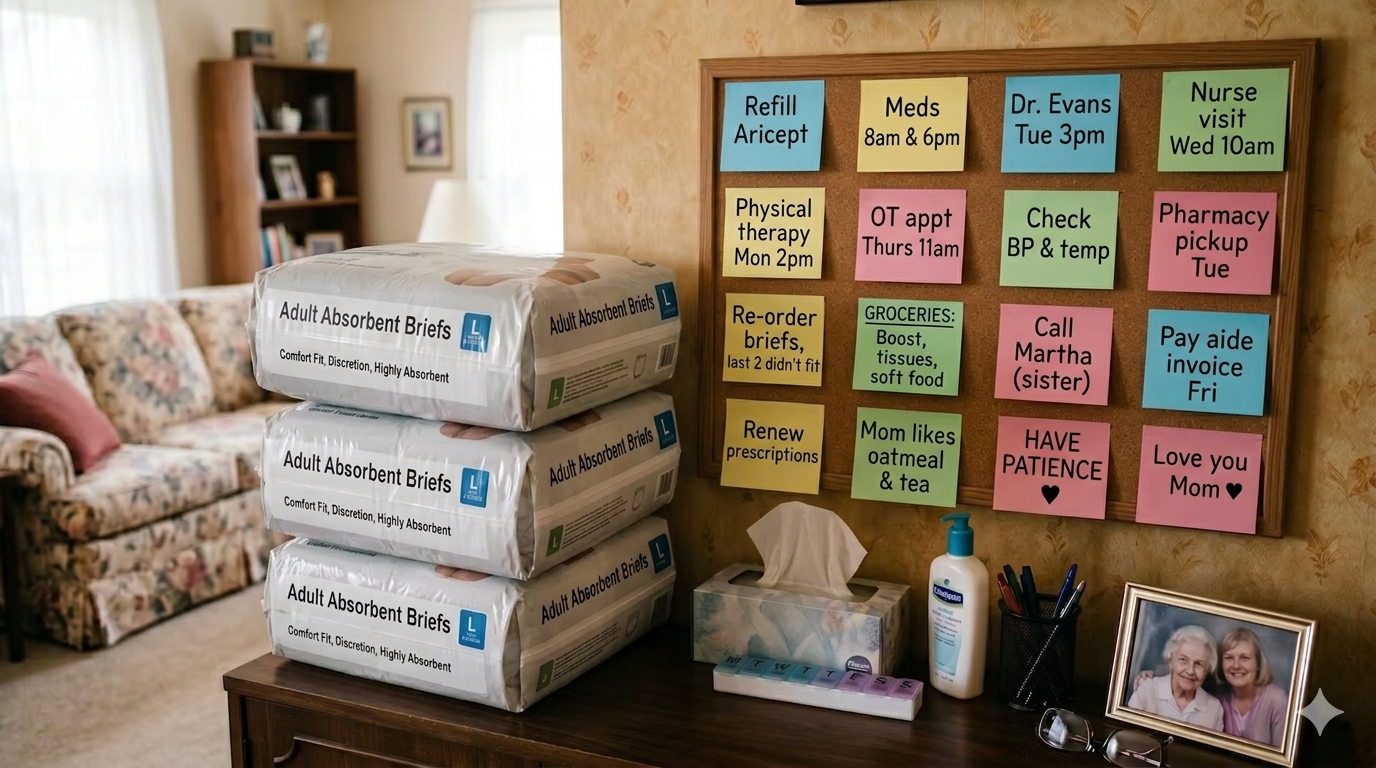
Every note here is a job no care plan assigned to anyone.
An agency can follow the care plan to the letter, and the family can still feel alone in it. That is not a contradiction. It is a map problem.
There are three journeys here. The care plan only knows one.
The medical journey belongs to the care plan. Medications, mobility, wound care, vitals, fall risk. It tells the aide what to do, when to do it, and how to keep someone safe while doing it. This is the work agencies are built to do, and most do it well.
The emotional journey belongs to the family, and no one writes it down. It is the running list of questions a daughter carries at 2 a.m. What does this diagnosis actually mean. Can we sustain this financially. What will it do to my relationship with my brother, who lives closer and is doing more. What comes next. How do I know we are making the right decision at the right time. There is no document for this journey. There is no assigned owner. There is just a person, usually a spouse or an adult child, carrying it quietly.
The logistical journey belongs to everyone and no one. Who drives mom to the appointment. Who makes the appointment in the first place. Which brief to re-order, after the last two styles did not work out. Who keeps the siblings and the aide working off the same calendar. This is the journey the agency and the family travel together, and it is the only one neither side formally owns. That is not a coincidence. It is exactly where things fall through.
When I mention we help with family communication, a lot of agency owners tell me they have that covered. Their aides report everything; they know what is happening in the home. They are right. But that is communication about one thing: the care plan, and compliance to it. The questions families carry rarely reach a shift note: what happens as the needs grow, what this will cost, whether they are making the right call at the right time. Airtight communication about the plan still never touches the other two journeys.
The other two journeys do not stay quiet just because no one is tracking them. They come back on the agency's side: the 7 a.m. complaint call, the surprise discharge, the family that quietly switches providers.
Here is the part that surprises people. The unmapped journeys are not small.
AARP's 2026 report counted 59 million family caregivers in the United States providing 49.5 billion hours of care. That is the labor of the emotional and logistical journeys. It already exists. It is just unpaid, and largely uncoordinated. And the people doing it are stretched thin: 64 percent hold a job on top of caregiving, and 78 percent report burnout, according to A Place for Mom's 2025 caregiver survey.
You can see the cost of an unmapped journey in the regret. In a 2025 A Place for Mom survey, 24 percent of families said their need for care was immediate when it arrived, and 54 percent said they wished they had started planning sooner. That is what happens when a journey is real but no one is holding the map. Decisions get made in a rush, and families carry the second-guessing for years.
None of this is a failure of love, and none of it is a failure of skill. Families are not failing because they care too little. Agencies are not failing because they work too poorly. The medical journey has a map and the other two do not. That is an infrastructure gap, not a character flaw.
And here is why it matters for agencies specifically. When Activated Insights looked at what moved client retention in 2024, the answer was communication. Client turnover fell to a seven-year low while caregiver turnover stayed near 75 percent. The thing families are starving for, a clear line of sight into what is happening and what comes next, is the same thing that keeps clients and steadies a roster. The interests are not in tension. They point in the same direction.
We built CuroNow as the coordination layer for the two journeys the care plan was never meant to hold: a shared place where the family and the agency can finally see the same picture.
Good agencies do not lose families over the care. They lose them over everything the care plan was never written to hold.
