
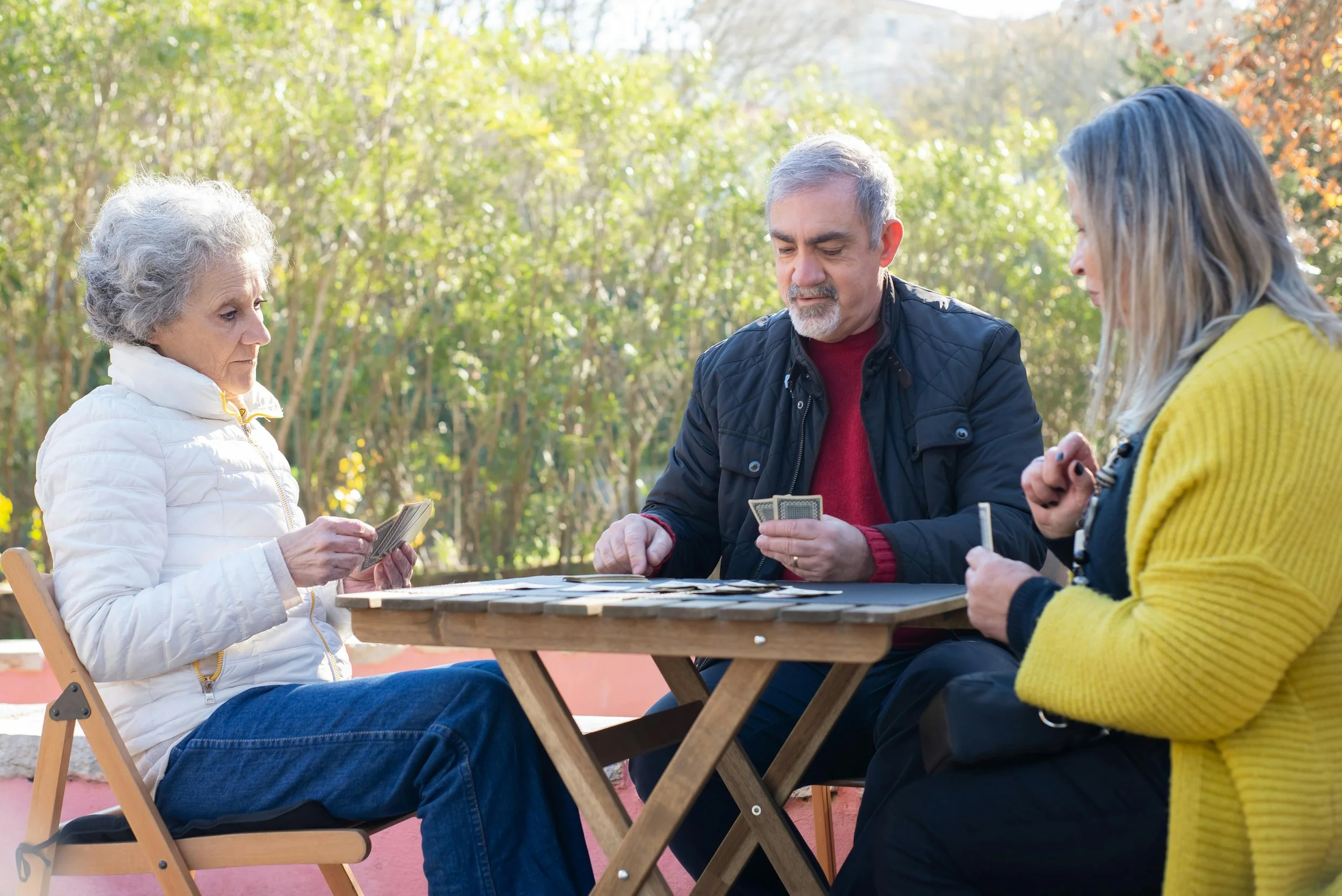
Photo by Kampus Production on Pexels
Something remarkable is happening right here in Madison — and honestly, when I first read about it, I had to slow down and sit with it for a minute.
Agrace, a nonprofit hospice and palliative care organization I deeply respect, is building the first dementia village in the United States on its Fitchburg campus, just outside Madison. Groundbreaking is planned for May 2026. Opening is projected for fall 2027. And I can't stop thinking about what this means — not just for people living with dementia, but for how we all think about aging, family caregiving, and community.
So... What Exactly Is a Dementia Village?
The concept was born in the Netherlands in 2009, at a place called Hogeweyk — a community in the Amsterdam suburb of Weesp that was quietly rewriting the rules of memory care. Instead of long institutional corridors and locked wards, Hogeweyk gave its 188 residents something radical: a neighborhood. Shops. A pub. A garden. A theater. A grocery store where residents could browse the aisles, even though no money actually changed hands.
The philosophy behind Hogeweyk is deceptively simple: people living with dementia are still people. They still respond to familiar environments, routines, and social rhythms. When care is built around that truth — rather than around the logistics of medical oversight — quality of life improves meaningfully. Fewer residents are bedridden. Depression decreases. The model has since spread to parts of Europe, Australia, China, and Canada.
"All too often, when someone enters memory care, their life gets smaller, and the way each day unfolds is regimented and uniform. We want to give those people back their autonomy." — Lynne Sexten, President & CEO, Agrace
Why Has America Waited So Long?
It's a fair question. Hogeweyk opened in 2009. It's been studied, celebrated, and replicated across three continents. So why is it only now arriving in the United States?
Part of the answer is structural. American long-term care has historically been shaped by regulation, reimbursement models, and liability concerns that make large-scale experimentation difficult. Facilities have prioritized medical safety — often at the expense of autonomy and quality of life. The regulatory pathway for something as novel as a dementia village has had to be worked out from scratch; Agrace is actively partnering with state regulators to figure out how the village will be licensed under assisted living memory care rules.
There have been attempts. A village was proposed in Holmdel, New Jersey. But no project has crossed the finish line — until now. Agrace's $40 million project, backed by a $7 million lead gift from Madison philanthropists Ellen and Peter Johnson and a broader $30 million capital campaign (45% raised), is the one that's actually breaking ground.
The scale is meaningful: eight small homes, each housing six to eight residents grouped by shared interests and life experiences. A Main Street feel, with a restaurant, spa, sundry store, pub and grill, coffee shop, and arts and crafts center. On-site workforce housing for caregivers. And a Day Club for 40 to 50 adults with dementia who live at home but want daily programming and community — which I think is one of the most quietly important parts of the whole model.
Will People Come to Madison for This?
I think the honest answer is: probably yes, and probably not in the way we might first imagine.
The village will initially serve 65 residents, with pricing comparable to other memory care facilities in the area — covered by private pay for room and board, with Agrace billing insurance for medical care. There's an endowment to help families who can't cover the full cost. Prospective residents will likely be able to apply in early 2027.
But here's what I find more interesting than the residency question: if this model works — and there is strong reason to believe it will — Madison becomes a proving ground for a new approach to dementia care in America. Researchers, policymakers, healthcare organizations, and family advocates will come here to study it. Agrace has already been in contact with organizations around the country watching closely. Madison's reputation as a hub for healthcare innovation, research, and progressive social policy makes it a natural home for this.
The more pressing draw may actually be for families already in the region. The Day Club model — where people living at home can participate in daily village life without being full residents — is a genuine lifeline. It addresses something families know intimately: the isolation that often accompanies dementia long before residential care becomes necessary.
What This Means for Families Right Now — and Where CuroNow Fits
I started CuroNow because my co-founder Rukmini and I kept hearing the same story from families: managing a loved one's care is a full-time job layered on top of an already full life. The calls to home health agencies. The group texts that go unanswered. The shared calendar that no one can agree on. The guilt of not being in the room.
What Agrace is building addresses the physical and emotional environment of dementia care. What CuroNow addresses is the coordination layer that wraps around any care setting — the communication between family members, the updates from caregivers, the shared visibility that helps a family in three different cities feel like they're on the same team.
The dementia village model, by design, involves a community of caregivers: household staff, clinical teams, Day Club coordinators, and families who can come and go. That is a communication ecosystem. And one of the things Agrace's CEO Lynne Sexten specifically called out — alongside quality of life — is caregiver burden. That's exactly the problem CuroNow was built to help solve.
We're proud to be part of this conversation in Madison, and to be building tools that can complement the remarkable innovation happening right here in our community.
The Bigger Picture
Over 55 million people worldwide are living with dementia today. That number is projected to reach 139 million by 2050. In the U.S. alone, 7.2 million adults 65 and older have significant memory loss. These aren't abstract statistics — they're parents, spouses, grandparents, neighbors.
For decades, the dominant response has been to make care safer and more efficient. Agrace is asking a different question: What if we made it more human?
That question is worth following. And we're grateful it's being asked first right here in Madison.
CuroNow is a care coordination app for families managing home-based senior care. We're based in Madison, WI, and we're building tools to reduce the communication burden on families and the care teams who support them. Learn more at curonow.com.