
Loving Someone Who Is Slowly Becoming Someone Else
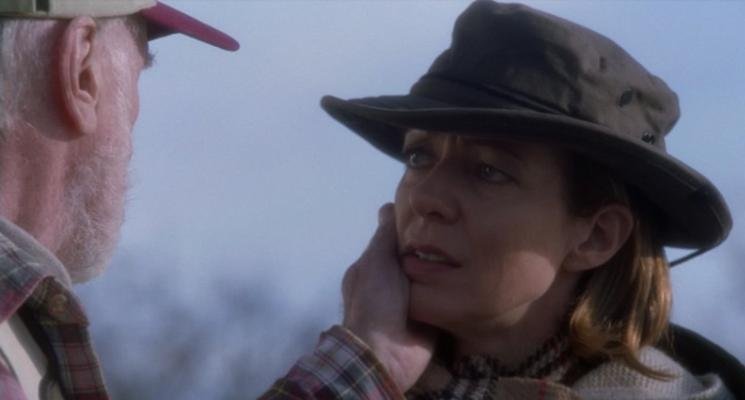
Allison Janney and Donald Moffat in The West Wing
I've been rewatching The West Wing - comfort TV for complicated seasons of life. And there's a scene in Season 4 that stops me every single time.
CJ Cregg, the fierce, brilliant White House Press Secretary, goes home for her high school reunion. And there she is, standing in her childhood home, watching her father, a retired math teacher, move in and out of clarity. One moment he's lucid, warm, fully him. The next, he's confused, frustrated, unreachable. His third wife, the woman who loved him from afar for years before finally having him, has left. Because losing the person you love to dementia, piece by piece, is its own kind of grief.
CJ has to go back to Washington. The country doesn't pause. Her job doesn't pause. But how do you walk away? Who will look after him? And he doesn't believe he needs looking after.
That scene isn't fictional. That scene is millions of families, right now.
The Unpredictability Is the Hardest Part
I think about my sister and brother-in-law. Mid-trip, overseas for work, when the call came. My mother had developed a wet cough. Acute pulmonary edema - a condition that can turn critical in hours, not days. They were on a plane home before the day was out.
That's caregiving. Not a gradual transition you plan for. A phone call that restructures your entire life in a single afternoon.
54% of caregivers say they wish they had started making a care plan sooner. Not because they didn't love their parents. Because no one warned them how fast things can shift.
The Numbers Are Staggering, and Still Not Enough
63 million Americans are family caregivers right now, nearly 1 in 4 adults, a number that has jumped by 20 million in a single decade, according to the AARP and National Alliance for Caregiving's 2025 national report. 1 in 3 of those caregivers have been in the role for five years or more. Stress and anxiety affect 87% of caregivers at some point, experienced weekly by more than half. And yet most families enter this season of life completely unprepared, practically, emotionally, and logistically.
40% to 70% of family caregivers report clinical symptoms of depression. That's not a caregiving crisis. That's a public health emergency hiding in plain sight.
What Atul Gawande Understood, and What We Keep Forgetting
I'm currently reading Being Mortal by Atul Gawande, and it's one of those books that makes you feel seen and unsettled at the same time. Gawande calls for a shift away from survival as the sole goal of medicine, toward well-being, autonomy, and quality of life. His central argument is that we've medicalized aging to the point where we've forgotten the human being inside it.
He writes that medicine has turned aging and death into medical processes, when what most elderly people actually want is agency, dignity, and to feel that their life still has purpose and meaning.
CJ's dad didn't want a care plan. He wanted to still be himself. That tension, between what someone needs and what they're willing to accept, is at the heart of almost every caregiving story I've heard.
Acceptance Isn't Giving Up
A Jan 2026 Wall Street Journal piece on caregiving put it plainly: well-being for caregivers isn't really about sleep, diet, or stress management, though all of those matter. It's about accepting that a loved one can't always do what they once did. That their personality may change. That anger, guilt, and grief are not signs of failure - they are signs of love.
Being present is often the most we can do. And sometimes, it's enough.
If You're in This Season, Here's What I'd Hold Onto
1. Start the conversation before you need to. Ask about wishes, preferences, finances, and fears while there's still time and clarity to have the conversation well.
2. Coordination is care. The information scattered across texts, portals, and memory - someone needs to pull it together. That shared picture is what prevents crises from becoming catastrophes.
3. Don't wait for a diagnosis to pay attention. Small changes - a wet cough, a forgotten word, a subtle withdrawal - are often the early signals. Gawande notes that the realities of old age often involve small, incremental declines that families miss because no one is connecting the dots.
4. Your grief is valid. Mourning someone who is still alive, their old self, their independence, the future you imagined together, is a real and recognized experience. You don't have to pretend it isn't hard.
5. You cannot do this alone. More than 40% of caregivers are the sole caregiver for the person they're caring for. That is not sustainable. Ask for help. Build a circle. Let people in.
CJ eventually goes back to Washington. But she carries her dad with her. That's what caregiving looks like for most of us - not a clean handoff, not a solved problem. A weight you learn to carry, and carry with love.
At CuroNow, we're building the tools to make that weight a little lighter - for the families who are in it right now, and the ones who don't yet know they're about to be.
