
When “Somewhere Safe” Isn’t Safe Enough
"I put it in a very safe place."
It’s something many of us have heard from our parents or older relatives. The will, the Power of Attorney, the home title — all carefully tucked away, years ago. But in the moment of crisis, that “safe place” can feel like the most impossible place to find.
Imagine this: It’s 2 a.m. and your parent is in the emergency room. The admitting nurse asks for a Power of Attorney (POA). Your mom swears she gave it to her lawyer. Your sibling thinks it’s in the file cabinet. Your dad insists he hid it “somewhere safe.” Hours pass as phone calls are made, drawers are opened, and panic sets in.
This scenario is more common than we like to admit — and it’s exactly why caregivers told us they needed a better way.
The burden of missing paperwork
Caregiving is already stressful, and misplaced paperwork only adds to the emotional weight.
AARP reports that 60% of adults do not have a POA or advance directive readily accessible when needed.
Families often spend hours or even days locating essential legal documents in emergencies.
Delays can cost money, add stress, and even prevent timely medical decisions.
For adult children, nieces, nephews, or grandchildren, the frustration isn’t just about logistics. It’s about the guilt of not being prepared — of standing by helpless while the people you love most need you to act.
What caregivers told us
At CuroNow, we’re building every feature around the real requests of caregivers. And this one kept coming up:
“We don’t just need to store the document. We need to know exactly where it is, who has it, and how to find it when time is short.”
Caregivers wanted something beyond generic “cloud storage.” They wanted context:
Who holds the document?
Where is it physically located?
How do I get it if I’m not in the same house, or even the same state?
This feedback became the blueprint for one of CuroNow’s simplest — yet most powerful — features.
Turning caregiver requests into solutions
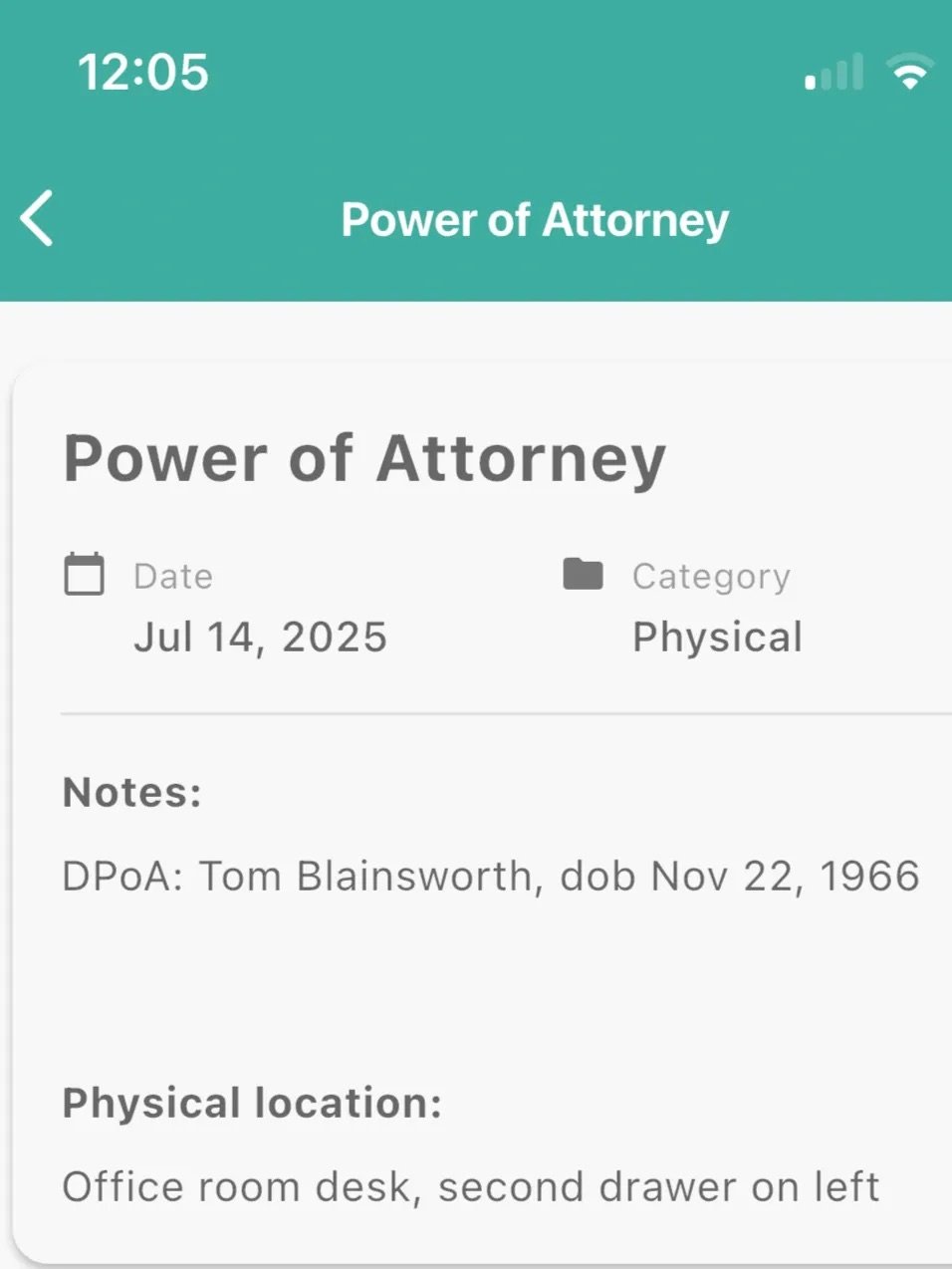
On our app, a caregiver can log and track vital information such as:
Document type: Power of Attorney
Date recorded: July 14, 2025
Who holds it: Tom B, DOB Nov 22, 1966
Physical location: Office room desk, second drawer on the left
It may look simple on the screen, but in a crisis, that level of clarity can be life-changing.
No more rifling through file cabinets at midnight.
No more guessing games between siblings.
No more “safe places” that become stress traps.
Instead, everyone in the care circle knows what exists, where it lives, and how to find it — when it matters most.
Why this matters for families
Legal documents like POAs, wills, and home titles aren’t just paperwork. They are the keys to medical decision-making, financial access, and family stability. Without them, families can face:
Treatment delays during medical crises
Costly legal disputes between siblings or heirs
Stress and guilt that strain family relationships
By making these documents visible, trackable, and findable, we help families avoid unnecessary conflict and focus on what really matters: being present for their loved ones.
Building CuroNow with caregivers, for caregivers
This is just one example of how we’re co-creating CuroNow alongside real families. Every feature is based on a caregiver story, a request, or a pain point.
We believe caregiving isn’t only about the daily tasks — it’s about being ready for the critical moments. And readiness starts with confidence: knowing the right information is always at your fingertips.
Because at the end of the day, caregiving shouldn’t mean scrambling for documents. It should mean supporting, connecting, and caring — without the added chaos.
