
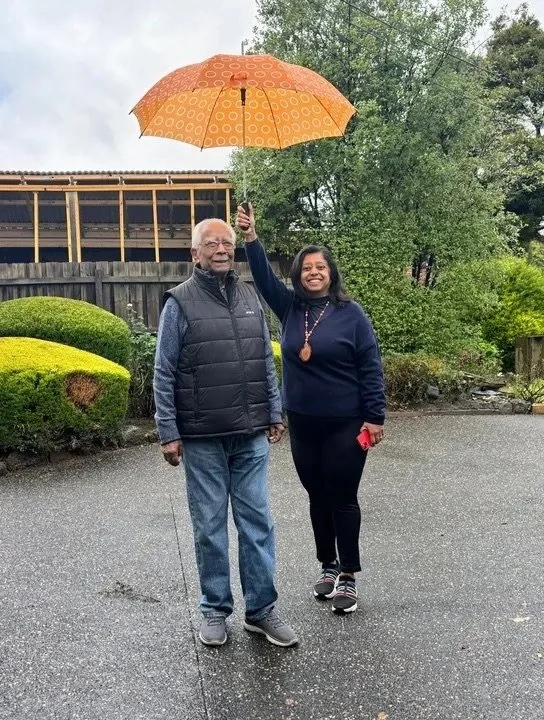
I was walking with my dad when I realized I needed to slow down to keep in step with him. This is the same man whose long legs I could barely keep up with as a kid—I practically had to run just to match his stride. Now I was the one unconsciously pulling ahead, catching myself, adjusting my pace. In that moment, I felt something inside me crack. Not dramatically—just a hairline fracture that whispered: things are different now.
If you're reading this, you've likely felt your own version of that moment. Maybe it was when Mom couldn't figure out her medications anymore. Or when you realized you were now making decisions for the parent who once made every decision for you. The role reversal in caring for aging parents isn't just logistically complicated—it's emotionally disorienting.
But what if these fractures in our family relationships could become something more than just breaks to mourn?
The Ancient Art of Embracing Imperfection
There's a centuries-old Japanese art form called kintsugi—the practice of repairing broken pottery with lacquer mixed with powdered gold. Instead of hiding the cracks, kintsugi makes them the most beautiful part of the piece. The broken bowl isn't discarded or disguised. It's transformed into something more valuable than it was before it broke. I keep thinking about this when I talk to families navigating the caregiving journey with their aging loved ones.
When Everything Changes: The Initial Break
The transition into family caregiving rarely happens all at once. Sometimes it's sudden—a fall, a stroke, a devastating diagnosis. More often, it's gradual. Little moments that accumulate until one day you realize: we're not the family we used to be.
You're now the one:
Managing Mom's doctor appointments instead of asking her advice about yours
Making sure Dad takes his pills when he once made sure you did your homework
Handling their finances when they taught you how to balance a checkbook
Worrying about their safety the way they once worried about yours
This role reversal in elderly care can feel fundamentally wrong. Unnatural. Like something precious has been irreparably damaged.
And here's what I want you to know: that feeling is valid. Something has changed. The relationship you had has cracked.
But cracks aren't endings. They're inflection points.
The Gold in the Gaps: Connection Through Caregiving
Kintsugi teaches us that repair takes time. You don't rush gold into the crevices. You work carefully, intentionally, understanding that healing is a process, not an event. The same is true for family caregiving relationships. When we accept that things have changed—really accept it, not just intellectually but in our hearts—we create space for something unexpected: deeper connection. I've watched this transformation happen countless times.
Adult children who initially grieved the loss of their "old" parent eventually discover dimensions of their relationship they never knew existed:
The grandfather who can't remember yesterday might still light up sharing stories from 1952—and suddenly you understand where you come from in ways you never did before.
The mother who needs help bathing might share vulnerabilities and truths she never revealed when she was in the "strong parent" role.
The father who requires daily care might express gratitude and love more openly than he did in forty years of self-sufficiency.
These golden veins of connection often run directly through the cracks we initially wanted to deny.
Healthy Aging Starts With Healthy Relationships
Research consistently shows that strong social connections are among the most powerful predictors of healthy aging. Not just physical health—but cognitive function, emotional wellbeing, and even longevity. But here's what the research doesn't always capture: those connections become most meaningful when they're authentic. When they acknowledge reality rather than pretending everything is fine. When we embrace the kintsugi approach to caregiving for elderly parents, we're not being resigned or pessimistic. We're being honest. And from that honesty, real connection grows.
The Stronger Bowl
Will your relationship with your aging loved one be exactly what it was? No. That bowl has broken. But can it become something even more beautiful? Something that honors both the original form and the journey it's been through? Yes. Absolutely yes. The gold in kintsugi isn't just decorative—it literally makes the piece stronger at the break point. When families navigate aging and caregiving with intention, honesty, and compassion, relationships often become more resilient than they were before the fracture. This doesn't mean caregiving is easy. It doesn't mean there won't be hard days, frustration, grief, and exhaustion. It means that within this challenging chapter, there's an opportunity to create something that honors both the difficulty and the beauty. To fill the cracks with gold.
Your Kintsugi Journey
If you're in the middle of a role reversal with your aging parent or loved one, give yourself permission to grieve what's changed. The cracks are real. And then, when you're ready, look for the gold—those moments of unexpected connection, the conversations you wouldn't have had otherwise, the way you're learning to love differently and maybe more deeply.
Your family's story isn't broken. It's being transformed.
And that transformation, though difficult, might be the most beautiful work you ever do together.
At CuroNow, we understand the complex journey of caring for aging loved ones. Our platform helps families navigate the challenges of elderly caregiving while fostering the meaningful connections that matter most.
Rukmini
Co-Founder, CuroNow
Supporting Caregivers. Strengthening Connections.
