
Here's a question that haunts many adult children: When your mother forgets where she put her keys for the third time this week, is that normal aging or early dementia? When your father seems a little more unsteady on the stairs, is he just getting older or is this something a doctor needs to see?
The terrifying truth is that most of us have no idea. And we're making critical health decisions for our aging loved ones based on guesswork, Google searches, and gut feelings.
The Hidden Burden of Untrained Caregivers
Here's what the healthcare system doesn't tell you: over half of family caregivers are managing complex medical care - medication administration, wound care, symptom monitoring - yet only 11% have received any training for basic activities of daily living, and just 22% for medical tasks. Think about that. We're being handed prescriptions, discharge instructions, and medical equipment, then expected to figure it out on our own.
I've heard this story dozens of times: an aging parent comes home from the hospital, and suddenly you're responsible for managing five medications, watching for infection signs, helping with mobility, and monitoring a dozen symptoms. The discharge nurse spent 15 minutes with you. The doctor assumed you understood the medical terminology. No one asked if you actually knew what "watch for disorientation" or "monitor fluid intake" really means in practice.
You're not a nurse. You're not a physical therapist. But suddenly, you're expected to perform like both.
When "Normal Aging" Becomes Something More
The problem starts even earlier than medical crises. It starts with observation. Those subtle changes that make you wonder, "Should I be worried about this?"
Your mother repeats the same story twice in one conversation. Is that concerning, or is everyone a little forgetful sometimes?
Your father shuffles when he walks now instead of taking full steps. Is that just arthritis, or could it signal a balance issue that might lead to a fall?
Your parent seems less interested in their favorite activities. Are they just tired, or could this be depression?
These questions keep you up at night because you don't know what you're looking for. And here's the cruel part: by the time it's obvious something is wrong, you've often missed the early window when intervention could have made the biggest difference.
The Power of Collective Observation
Here's what I've learned from families who catch problems early: they're not smarter or more medically trained. They're just better at collecting and comparing observations.
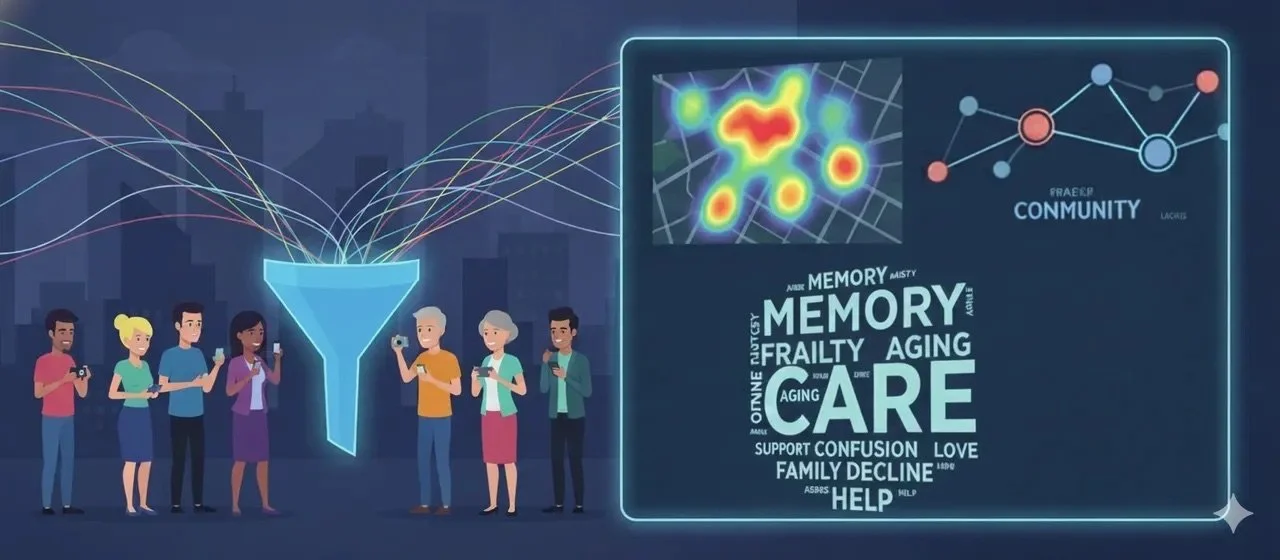
When only one person is watching, it's hard to know if something is a pattern or a bad day. But when three siblings are all independently noticing that Dad seems more confused in the evenings, or that Mom is eating less at every meal, suddenly you have data; not just worry.
This is where family coordination changes everything. If your sister visits on Tuesdays and notices Mom struggling to remember the grandkids' names, and your brother calls on Fridays and hears the same confusion, you're seeing a pattern. That's information you can take to a doctor.
Normal or Not: Some Real Examples
Let me share some scenarios where pattern-tracking made the difference:
The case of increasing forgetfulness. One family noticed their father forgetting recent conversations but perfectly remembering details from decades ago. Over two weeks, three family members logged his memory moments. The pattern was clear: short-term memory issues that got worse in the evening. The doctor diagnosed early-stage dementia and started medications that slowed progression.
The mystery of the declining appetite. A daughter noticed her mother eating smaller portions. At first, she thought maybe Mom was watching her weight. But when her siblings started logging observations, they saw Mom wasn't finishing any meals and had lost 12 pounds in six weeks. Turns out, poorly fitting dentures made eating painful. A simple fix, but only caught because everyone was paying attention together.
The fall that wasn't random. After a parent's fall, one family started tracking balance and mobility observations. They noticed Dad's unsteadiness was worse after taking a specific medication. The doctor adjusted the dosage, and the balance issues largely resolved.
Starting at the Beginning
The best time to start coordinating care isn't during a crisis. It's now - at the very beginning of the aging journey, when changes are subtle and preventable.
This means creating systems where family members can easily capture what they're noticing. Did Mom seem short of breath after climbing stairs? Did Dad take longer than usual to find the right words? These observations, logged and shared, become your early warning system.
You're not looking to diagnose your parents. You're looking to spot patterns that help healthcare professionals make better decisions. Because when you walk into a doctor's office and say, "We've noticed Dad is more confused in the evenings on these specific days," you're giving them information they can actually use.
You Deserve Better
The healthcare system shouldn't expect you to become a medical professional overnight. But until that system changes, we need to build our own safety nets; ways to pool our observations, spot what matters, and know when "just aging" has crossed into "needs medical attention."
You don't need to be trained as a nurse. But you do need tools that help you see patterns, coordinate with family, and make informed decisions about when to worry and when to breathe easier.
Because somewhere between "it's nothing" and "it's a crisis," there's a sweet spot: early intervention. And that's where families who work together, with the right systems, can make all the difference.
Rukmini
Co-Founder, CuroNow
Supporting Caregivers. Strengthening Connections.
