
What Nobody Tells You About Your Parent's Medications (Until There’s a Crisis)
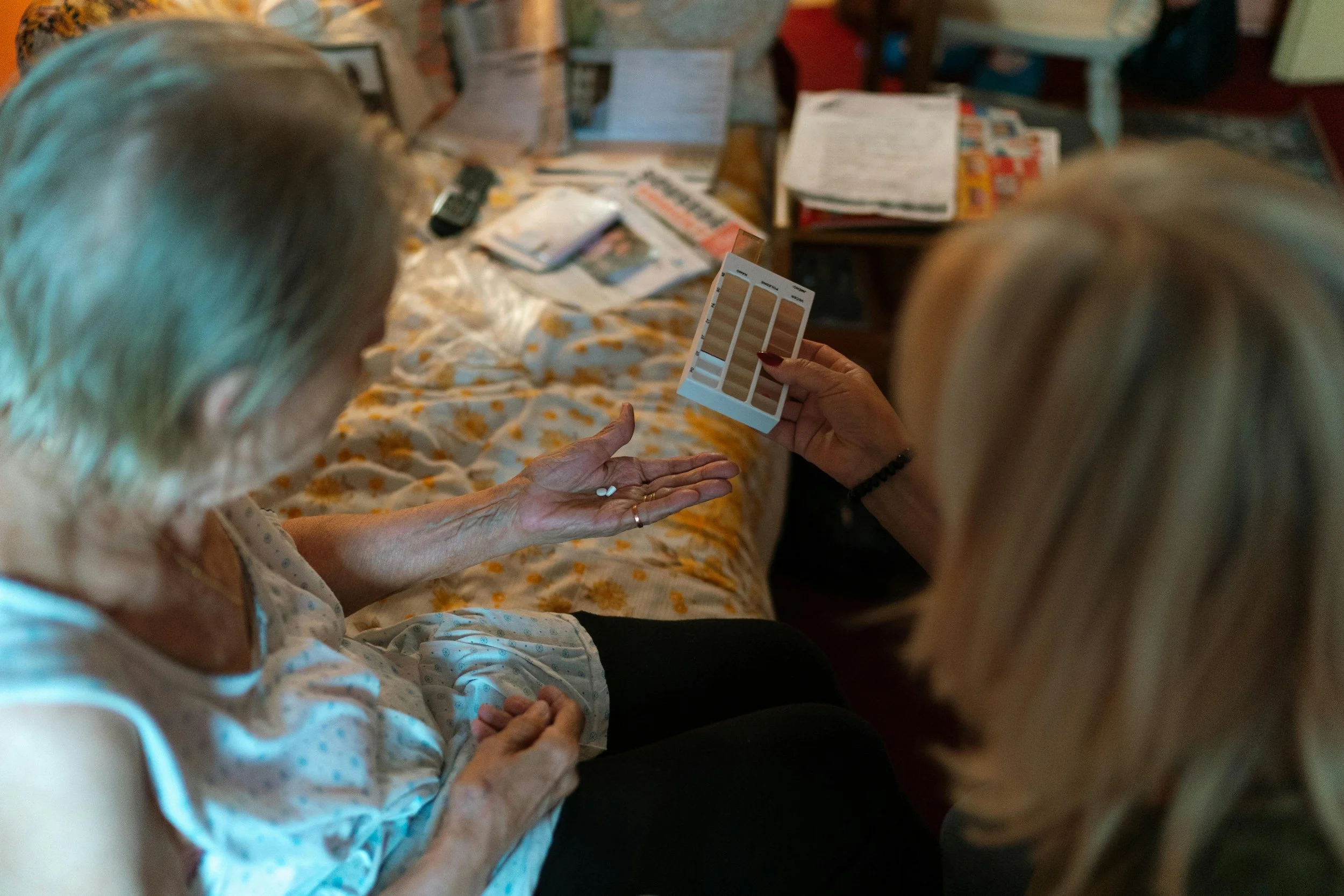
Photo: Jsme MILA on Pexels
Here's a question most adult children can't answer off the top of their head: Do you know every medication your parent takes right now? Not just the big ones. All of them. The prescriptions from the cardiologist and the primary care doctor and the rheumatologist. The over-the-counter sleep aid they picked up at the pharmacy. The supplement their neighbor recommended. The blood pressure pill they've been on for fifteen years that they don't even think of as a "medication" anymore.
If you drew a blank on a few of those, you're not alone. And it matters more than most people realize.
The number you need to know
1 in 3 adults in their 60s and 70s take five or more medications regularly. And taking five to nine medications raises the risk of a dangerous drug interaction to 50%.
That's not a fringe statistic. That's a coin flip, for a very large portion of aging adults.
Each year, adverse drug events account for nearly 700,000 emergency department visits and 100,000 hospitalizations in the US. Many of these are preventable. They don't happen because doctors are careless or families don't care. They happen because the full picture of what someone is taking rarely lives in one place, in one person's hands, at the right moment.
The problem isn't awareness. Most families know, in a general way, that medications are important to keep track of. The problem is that nobody ever quite gets around to building the record. Life is busy. The situation feels stable. And until it isn't, it's easy to assume someone else has it covered.
Why this is harder than it sounds
A typical aging parent might see two, three, or even four different doctors, a primary care physician, a cardiologist, an orthopedic specialist, maybe a neurologist. Each of those providers prescribes based on what they know. They don't always have a complete view of what the others have prescribed. And the patient, who is in the middle of all of it, is often not in the best position to be the connector.
Add to that the supplements, the vitamins, the occasional over-the-counter medication for pain or sleep or digestion, none of which typically show up in any medical record anywhere. And then factor in that nearly 95% of older adults have at least one chronic condition, and nearly 80% have two or more, which means complex medication regimens are the norm, not the exception.
The result is that in many households, the complete medication picture exists only in fragments: a pharmacy bag here, a discharge summary there, a note on the fridge that's six months out of date.
What to do about it, starting today
Building a medication record for your parent doesn't require a medical background. It requires a bit of time and a place to put the information. Here's what a solid medication record includes:
The basics for each medication:
Name of the medication (brand and generic, if known)
What it's prescribed for
Dose and frequency (how much, how often)
Which doctor prescribed it
When it was last reviewed or changed
Don't forget:
Over-the-counter medications taken regularly, including pain relievers, antacids, sleep aids, and allergy medications
Vitamins and supplements, including fish oil, vitamin D, magnesium, herbal supplements
Any medications taken "as needed" rather than on a regular schedule
Also worth capturing:
Known drug allergies and what kind of reaction occurred
Any medications tried in the past that were stopped and why
The name and phone number of the primary pharmacy
A note on getting the information: The easiest starting point is often the pharmacy itself. A pharmacist can print a full list of every prescription filled at that location over the past year. It won't capture everything, especially supplements or prescriptions filled elsewhere, but it's a strong foundation. From there, a conversation with your parent (and a quick check of the medicine cabinet) fills in most of the gaps.
How to keep it useful
A medication record is only as good as how current it is. The most common failure mode isn't failing to create one. It's creating one and then letting it go stale.
A few habits that help:
Update after every appointment. If a medication is added, changed, or stopped, the record changes too. This takes about two minutes if the record is easy to access.
Make sure more than one person has it. If you're the only one who knows where this information lives, it doesn't fully solve the problem. At minimum, one other family member should know how to access it quickly.
Bring it to appointments. A current medication list is one of the most useful things you can hand a doctor or ER nurse. It saves time, prevents duplicate prescriptions, and significantly reduces the risk of interactions from a new medication being added without the full picture.
Review it once a year. Medications accumulate over time. An annual review with the primary care doctor, sometimes called a medication reconciliation, is an opportunity to ask whether everything on the list is still necessary, still at the right dose, and still the right choice for where your parent is today.
The moment you don't want to be in
There is a version of this that most families only think about in hindsight: the 10pm ER visit, the paramedic asking what medications your parent is on, the frantic scrolling through text messages trying to find a photo someone took of a pill bottle six months ago.
That moment is stressful under the best circumstances. And when the stakes are high, having the information at your fingertips, organized and current and accessible to everyone who needs it, can genuinely change outcomes.
The good news is that it doesn't take much to be ready. It just takes starting.
Download CuroNow and build your parent's health record today. Future you will be glad you did. A secure, central place to store your parent's medication list, health records, and key documents, accessible to everyone in your care hub when it matters most.
Sources: Clarest Health (2025), PSNet / AHRQ (2024), Psychiatric Times (2024)
