
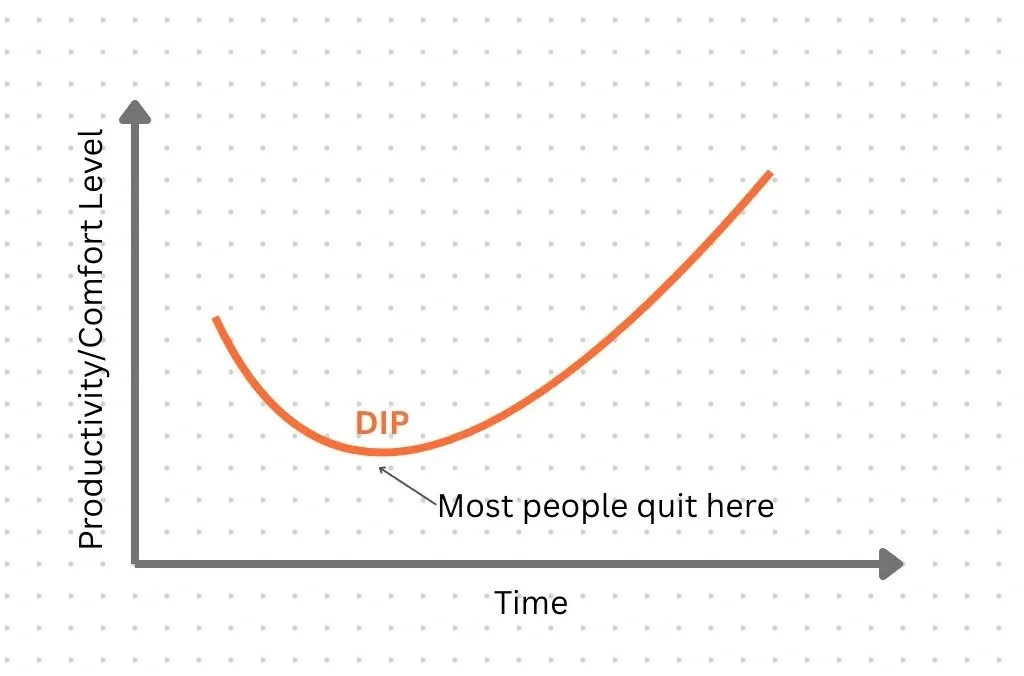
I spent over 15 years as a change management consultant, becoming a certified Change Acceleration Practitioner through GE's rigorous program. I led transformations across Fortune 500 companies, helping thousands of employees adopt new systems and processes. I have coached many teams and leaders on navigating change. But nothing prepared me for the brutal truth I discovered when I stepped into the caregiving world as both a founder and a far-away sibling to my sister supporting our parents' aging related realities: behavior change is hard for everyone, but it's exponentially harder when you're already running on empty.
The Reality No One Talks About
Research shows that writing down goals increases completion rates by 42%, and having an accountability partner boosts success by 70%. Powerful numbers. But here's what they don't tell you: caregivers are functioning in a completely different reality.
One in five U.S. adults provides regular care to a friend or family member, and caregivers had worse outcomes on 13 of 19 health indicators compared to non-caregivers. More than 60% of caregivers report increased stress levels, and 39% rarely or never feel relaxed. When you're managing medical appointments, medications, emotional support, and often your own job and family, you're not starting from a place of abundance. You're starting from depletion.
The "Just Do It Myself" Trap
I understand why caregivers resist new tools, even when they desperately need help. When you're juggling a parent's doctor appointments, your kids' school events, and a demanding job, learning yet another system feels impossible. "I can just keep track of this myself" becomes your mantra, even as the sticky notes multiply and the missed appointments increase.
But here's the hard truth from my change management background: This isn't sustainable. The initial dip in productivity while learning a new app feels impossible when you're already stretched thin. But that temporary discomfort is precisely what prevents long-term collapse.
The Value Conversation You Need to Have With Yourself
Before you even download a caregiving app - ours or anyone else's - stop and honestly answer these questions:
→ What is my current system actually costing me? Not just in time, but in missed information, family conflicts, your own health, and peace of mind.
→ What would it mean to have 30 minutes back each day? Six months from now? Two years from now?
→ Am I making decisions based on today's chaos or tomorrow's needs? Your parent's care needs will likely increase, not decrease.
This self-reflection isn't optional, it's critical. Without clear-eyed acknowledgment of where you are and what you truly need, you'll get distracted by bells and whistles that don't address your real pain points.
Why Change Inertia Wins (And How to Beat It)
About 40% of people's daily activities are performed in almost the same situations each day, and habits emerge through associative learning. Your current chaotic system? It's a habit. Even if it's failing you, it's familiar. Your brain prefers familiar chaos over unfamiliar order.
The key is this: You must create a window of opportunity to disrupt existing patterns. Maybe that's when Mom transitions to a new care level. Maybe it's when your sibling finally agrees to help. Maybe when you take on a much bigger role at work. Maybe when you're pregnant with your second child and you are scared about what may be needed from you in case of any parent-related emergency. Maybe it's simply acknowledging that what you're doing isn't working anymore.
Three steps to make behavior change stick:
Start micro-small. Don't try to track everything day one. Pick one feature that addresses your biggest pain point. Maybe it's just sharing updates with siblings to stop the "How's Mom?" calls.
Attach it to something you already do. Log into the app right after your morning coffee. Update it right before bed. Use your existing routines as scaffolding.
Find your accountability. Those who combine tracking with group support see achievement levels of 62% versus 36% for solo efforts. Share the app with a sibling or partner. Make it a shared tool, not another solo burden.
What CuroNow Actually Does
We built CuroNow because we lived this. Here's what it provides:
Centralized care coordination: One place for medications, appointments, medical history, care team contacts - no more hunting through emails, texts and various web portals at 11 PM.
Family collaboration: Give siblings, spouses, and adult children appropriate access. Everyone sees the same information. No more telephone games.
Medication intelligence: List all prescriptions and over the counter medications in one place. AI-powered interaction checks interactions between medications and top side effects for each drug - all the information you need when talking to doctors or pharmacists.
Document storage: Insurance cards, advance directives, care plans - all in your pocket when the ER doctor asks questions.
Care journey tracking: See patterns over time. When did the confusion start getting worse? Is this new symptom actually new?
CuroNow is designed for real caregiving chaos. Quick updates. Simple interface. Flexibility to track what you need, nothing more. Mobile-first because you're at the pharmacy, the doctor's office, your desk at work, rarely sitting at home with leisure time.
The Honest Reality
Will using a caregiving app require behavior change? Yes. Will it feel awkward the first week? Probably. Will you sometimes forget to use it? Almost certainly.
Studies show it can take anywhere from 15 to 254 days to truly form a new habit. That means you need to give yourself grace and time. The question isn't whether you'll struggle with the transition - you will. The question is whether the value on the other side is worth it.
For most family caregivers, the alternative to behavior change isn't maintaining the status quo. It's watching the status quo slowly destroy their health, relationships, and the quality of care they're able to provide to someone they love.
You're not alone in this. Caregiving is hard. Changing behavior is hard. But you don't have to choose between burning out doing it all yourself and the overwhelm of complex new systems. The right tool, adopted thoughtfully, can become your partner rather than another burden.
Rukmini
Co-Founder, CuroNow
Supporting Caregivers. Strengthening Connections.
