
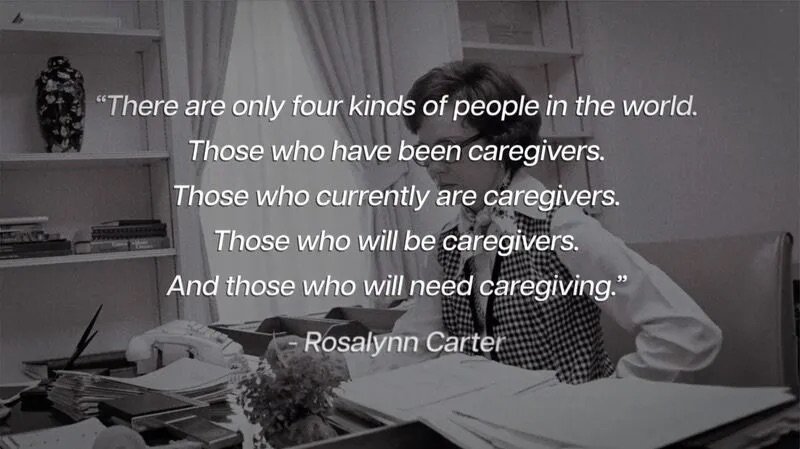
“There are only four kinds of people in the world. Those who have been caregivers. Those who currently are caregivers. Those who will be caregivers. And those who will need caregiving.” – Rosalynn Carter
There is so much talk everywhere, especially on LinkedIn, about how disruptive AI is going to be for the future of work.
But we’d like to challenge us to think about another, quieter disrupter: the Care Crisis.
Every day, 10,000 Americans turn 65.
1 in 5 U.S. adults is currently providing care to an aging family member.
Each year, nearly 4 million children are born in the U.S.
An estimated 60 million Americans are in the “sandwich generation” — providing care for both children and elders.
The numbers are staggering, but they also reflect something deeply human: caregiving is universal. Whether past, present, or future, every single one of us will experience it in some form.
What Does the Future of Work Need to Look Like for Caregivers?
If the future of work is to be sustainable, we can’t ignore caregiving. Financial security and well-being are critical for every caregiver, whether they’re supporting a newborn, an aging parent, or a partner with chronic illness. Without structural support, workplaces will see more absenteeism, stalled careers, and burnout.
And it’s not just women anymore. We are seeing more men step into caregiving roles than a generation ago, breaking down old stereotypes and reshaping what workplace support needs to look like.
Employers as Part of the Solution
This summer, we attended a caregiving conference here in Madison, sponsored by Bader Philanthropies. We heard from Beth Fields, Assistant Professor in the Occupational Therapy Program, Department of Kinesiology at UW-Madison, who highlighted how Wisconsin is recognizing companies that are leading the way.
The Exemplary Employer Recognition Award, led by the Wisconsin Family and Caregiver Support Alliance (WFACSA), honors Wisconsin employers who go above and beyond to support family caregivers in the workplace. Partners include the Wisconsin Department of Workforce Development and the Wisconsin Department of Health Services.
Why does this matter? Because caregiving isn’t just a “personal issue” — it’s a workforce issue.
Consider:
In Wisconsin, 8 in 10 caregivers report interruptions in their work life.
Caregivers experience 33% more days of poor mental health and 29% more days of poor physical health each month compared to non-caregivers.
Nationally, employers lose an estimated $33 billion annually in lost productivity due to employee caregiving responsibilities, plus billions more in turnover and health care costs.
The data is clear: supporting caregivers is not just the right thing to do — it’s smart business.
Challenging HR Leaders
So here’s our challenge to HR teams and business leaders:
Look beyond childcare. Caregiving spans the lifespan: children, parents, siblings, spouses, grandparents.
Normalize the conversation. Caregiving is a reality for the majority of your workforce. Making it “speakable” reduces stigma and absenteeism.
Build flexible policies. Paid family leave, flex scheduling, caregiver resource groups, and connections to community resources make a measurable difference.
Recognize caregiving as leadership. The skills caregivers build — empathy, resilience, problem-solving under stress — are the very qualities that organizations need.
A Three-Pronged Approach
Tackling the care crisis requires a systemic solution:
Policies & Communities → caregiver-friendly cultures, flexible scheduling, paid leave.
Services → access to affordable child care, elder care, respite care.
Tools → digital platforms to reduce cognitive overload, help families coordinate, and prevent isolation.
At CuroNow, we are focused on the tools. Our platform helps caregivers organize, share, and delegate tasks while staying connected. But we know tools alone aren’t enough. True impact requires all three — policies, services, and tools — working together.
A Collective Call to Action
Caregiving is the biggest unsung disruptor of the workforce. Just as AI will reshape how we do our jobs, caregiving will reshape who can do those jobs, how long they can stay, and what support they need to thrive.
Employers who recognize this will not only attract and retain top talent — they’ll build healthier, more resilient workplaces.
That’s why initiatives like Wisconsin’s Exemplary Employer Recognition Award matter. They shine a light on what’s possible and challenge all of us to do better.
Because caregiving isn’t an individual burden. It’s a shared human reality. And if we meet it with policies, services, and tools that reflect that truth, we can create a future of work that truly works — for everyone.
With urgency and hope,
Pat & Rukmini
Co-Founders, CuroNow
