
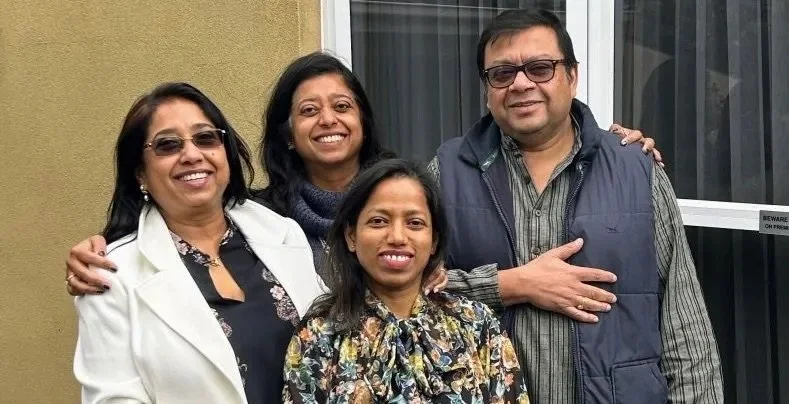
I am that sibling.
The one who lives far away. The one who is not available in the middle of the night when a parent cannot breathe and the ambulance must be called. The one who cannot swoop in and take over for an afternoon so the primary caregivers can get respite. The one who cannot drive my parents to and from doctor appointments every week.
My primary role has been to be emotionally available — for my parents, my sister, and my brother-in-law. To listen when they need to vent. To visit when I can from overseas, and to bring a pause in the day-to-day through laughter, songs, and small joys.
And still, guilt lingers.
Sibling guilt in caregiving
This guilt is not unique to me. Research shows that long-distance caregivers report higher stress, emotional strain, and financial burden — and women especially carry a disproportionate share of the guilt. More than half of siblings in one national survey reported increased guilt when they couldn’t be physically present for caregiving. And while guilt is rooted in love, it often weighs heavily on mental health, family relationships, and even decision-making.
Sibling dynamics in caregiving are complicated. Roles feel unequal, conflicts arise, expectations are unspoken, and no matter what we do — we often wonder if it’s enough.
Advice for Long-Distance Siblings
If you’re a sibling who lives at a distance (or feels less present) in a caregiving dynamic, here are reflections and small practices that have helped me — and might help you:
Redefine “help” and “presence.”
Physical presence is not the only measure of love or care. Emotional support, coordination, research, and advocacy from afar matter deeply.Communicate openly with siblings.
Ask: What do you need from me? How can I support you, even from far? Sometimes just having you validate what they are doing is itself a relief.Set boundaries to protect yourself.
Guilt can push you into burnout. Know what your limits are — in time, emotional capacity, finances — and honor them.Share decision-making and tasks — even symbolic ones.
If direct caregiving isn’t possible, take on “behind the scenes” tasks (insurance, medical forms, coordination) or even planning respite care, reviewing treatment plans, or being the sibling liaison.Practice self-compassion.
Circumstances like distance, work, and health limit options. You can’t do everything — but you can do what you can. That is already meaningful.Use technology wisely.
Remote monitoring tools, video calls, shared calendars, medical apps — all can help you feel more connected and effective from afar.Honor your role and contribution.
Even when guilt creeps in, affirm your contribution. Caregiving isn’t only physical — it’s emotional, relational, and strategic.
Why Pat and I built CuroNow
My friend and co-founder, Pat Setji, knows this feeling well. We first met as fellow board members at our community hospital, where we quickly bonded over our personal caregiving journeys.
Pat’s story mirrors mine in its own way. Her mom lives in Durham, NC, where Pat’s brother — just five miles away — does the majority of the day-to-day caregiving. Years earlier, when her dad fell ill, Pat’s sister quit her job to move in with their parents and be a full-time support in the three short months between diagnosis and his passing from pancreatic cancer. Those months were filled with turbulence, love, and heartbreak — and with the very real emotions of distance, guilt, and helplessness.
Together, we share this lived experience of being the sibling who isn’t always physically there — but who carries the emotional weight, the worry, and the guilt just the same.
What we want for caregivers
This is why we created CuroNow. Not just an app, but a space that validates every type of caregiving — from the sibling who lives five miles away to the one who lives across the ocean. From the sibling who provides daily physical support to the sibling who holds the emotional center of the family.
We believe:
Remote caregiving is real caregiving.
Emotional support is just as critical as physical care.
Sibling guilt deserves acknowledgment and tools to manage it.
Families need help communicating and sharing the caregiving load.
CuroNow is our way of turning those shared experiences of guilt and distance into something constructive: a caregiver-first platform that strengthens families, reduces stress, and builds connection across miles and generations.
With empathy and understanding,
Rukmini
Co-Founder, CuroNow
