
Caregivers in the Workplace
Why Leadership and Care Go Hand in Hand
Caregivers in the Workplace: Breaking the Silence
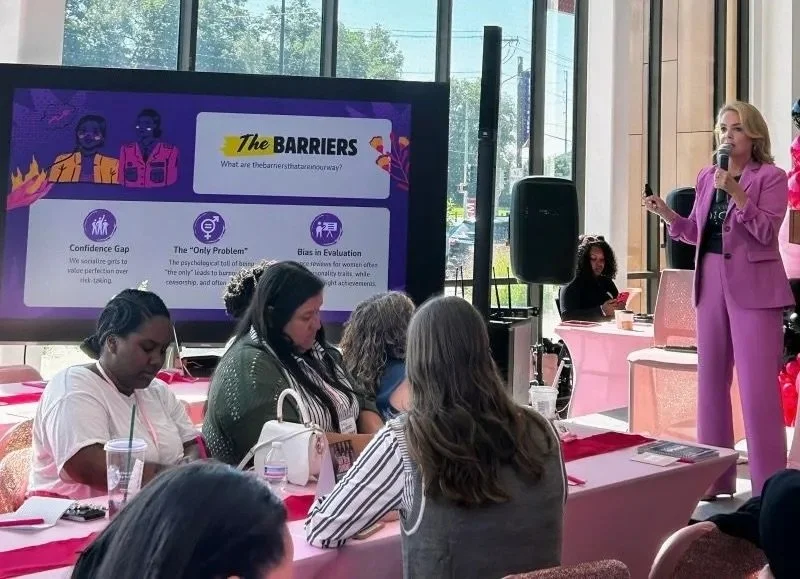
At the Innovation Her Tech Summit earlier this year, keynote speaker Jen Dirks named a tough reality: one of the barriers women face as they aspire to leadership is the perception that they will be “distracted” by caregiving responsibilities at home. The assumption is that women cannot both lead at work and care at home — at least not without something giving way. We both knew that reality well. In our own ways, we’ve lived it.
Our Story: Caregiving Across Careers and Continents
Early in our careers, one of us faced this reality at 34 — working on a male dominated global team, the only woman in the group, traveling internationally every few weeks, and chasing a promotion while grieving her father’s passing, supporting her newly widowed mother, and navigating an early pregnancy. In 2008, conversations about caregiving at work were rarely normalized. Silence felt safer than disclosure, even though the weight was immense.
More recently, the other has been building her executive career here in the U.S. while raising children and supporting her parents across another continent. From thousands of miles away, she has watched her sister shoulder the daily caregiving load. The guilt of distance is constant — much like the guilt her co-founder felt watching her brother step in as the primary caregiver for their mom.
Different contexts, but the same threads: caregiving layered on top of ambition, love, and responsibility, often carried invisibly.
What Has Changed — and What Hasn’t
The good news is that progress has been made. Conversations about caregiving in the workplace are more common today than they were in 2008. Companies are beginning to recognize that absenteeism and burnout often stem from silent caregiving responsibilities. And we’re seeing shifting dynamics — more sons stepping into caregiving roles than a generation ago.
Still, the stigma hasn’t disappeared. Women remain more likely to step back from advancement opportunities, and men often feel they can’t speak up about caregiving needs without judgment. Too many employees are still managing caregiving in silence.
The Sandwich Generation Reality
Together, we are part of what researchers call the “sandwich generation” — adults caring for both children and aging parents at the same time. This generation is growing fast. Nearly 1 in 4 U.S. adults now belongs to the sandwich generation (Pew Research).
The strain is particularly acute for women, who make up 59% of caregivers. Many say caregiving has slowed or stalled their careers. A Harvard Business School study found that 73% of employees have caregiving responsibilities, and caregivers lose more than $500 billion annually in wages and benefits due to work interruptions.
These numbers confirm what we’ve both felt personally: the workplace was not built with caregivers in mind.
Why Caregiving Is Leadership
The irony is that caregiving develops the very skills that workplaces prize in leaders:
Empathy — understanding needs and responding with care.
Multitasking — managing competing priorities under pressure.
Decision-making in uncertainty — acting quickly with incomplete information.
Resilience — carrying on despite emotional and logistical challenges.
We’ve seen these skills in each other — in the global travel years, in long-distance caregiving calls, in moments of grief, and in moments of strength. Caregiving isn’t the opposite of leadership. It is leadership.
Lessons Learned
From our journeys, a few truths stand out:
Normalize the conversation. Caregiving is universal, but silence still breeds isolation.
Use what works at work. The same systems that make us effective executives — visibility, delegation, accountability — can reduce overload at home.
No one can do it alone. Families, siblings, friends, and communities must share the load.
Value caregivers as leaders. These lived skills strengthen not only families but also organizations.
Why We’re Building CuroNow
This is why we came together — drawing on our corporate executive experience — to build CuroNow, the tool we wish we had back then. We’ve both lived the invisible strain of caregiving — at work, at home, across oceans, and across generations. We’ve both seen what happens when one sibling carries the burden while another feels guilt from afar.
CuroNow is our way of transforming those experiences into something positive. Our app helps caregivers:
Organize what matters.
Make it visible.
Share responsibilities.
Delegate with ease.
Prevent isolation and build connection.
Because no one should have to choose between showing up at work and showing up for the people they love.
With empathy and determination,
Pat & Rukmini
Co-Founders, CuroNow