
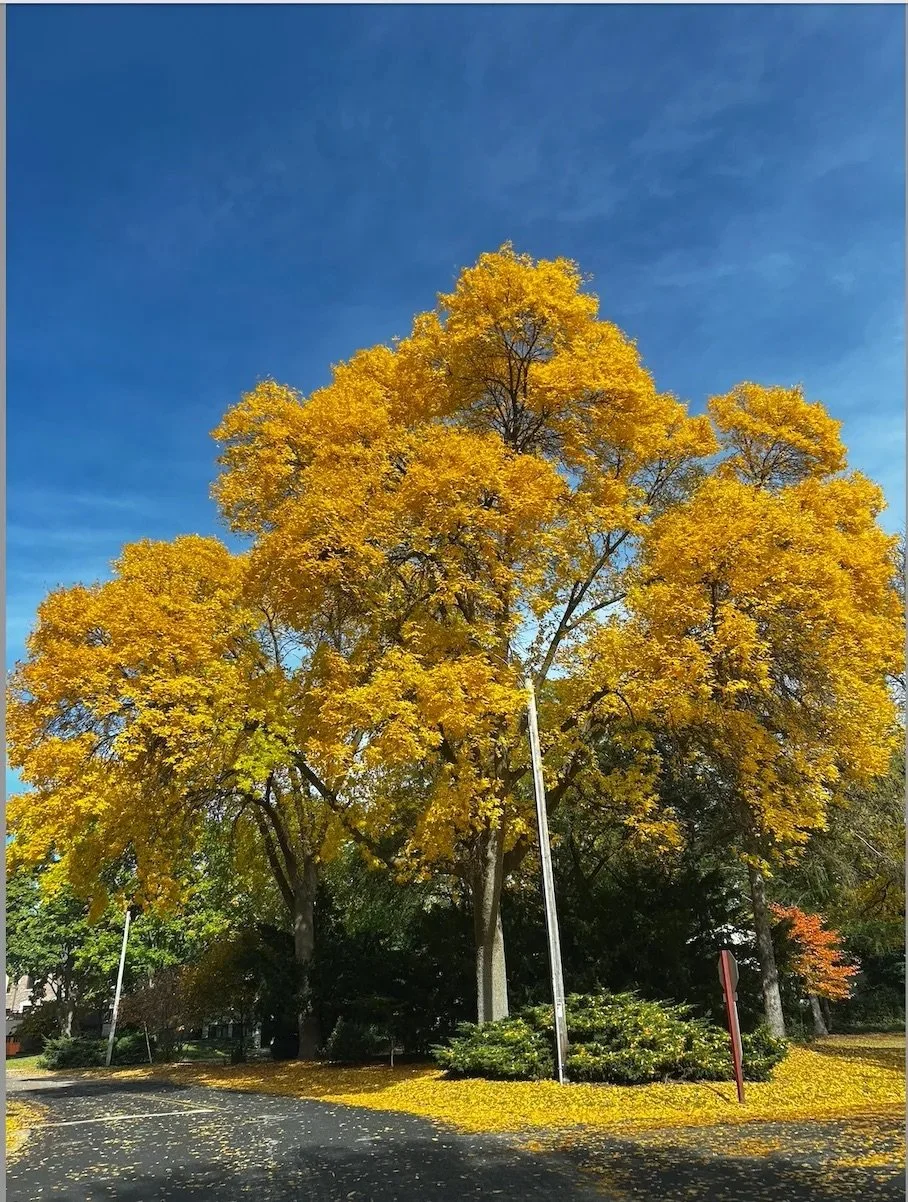
I'm standing at my kitchen window, watching the maple tree in our backyard shed its leaves like confetti at the world's slowest parade. My daughter walks in, backpack heavy with the weight of middle school, and asks me if I'm sad that summer's over.
"Not sad," I tell her. "Just thinking."
Fall has always gotten a bad rap. It's the season we associate with endings - leaves dying, gardens going dormant, daylight slipping away earlier each evening. We watch nature retreat and can't help but feel that melancholy pull. But here's what I've learned after fifty trips around the sun: endings are just beginnings we haven't learned to recognize yet.
The trick is knowing which timeline you're living on.
The Short Arc vs The Long View
If I focus on this week, this month, this quarter - yes, all I can see are the bare trees ahead, the cold approaching, the inevitable march toward winter's darkness. It's easy to get stuck there, in the immediate view where everything looks like loss.
But zoom out. Look at the full year, the complete cycle of four seasons. Suddenly, fall isn't an ending at all. It's the beginning of renewal. Those leaves carpeting my lawn? They're feeding the soil, preparing the ground for spring's explosion. The trees aren't dying, they're conserving energy, getting stronger, preparing for their next act. Fall is when nature reflects, resets, and refuses to give up hope.
The difference between despair and optimism often comes down to nothing more than perspective.
Living Between Seasons
I'm thinking about this a lot these days because I'm living it in the most visceral way possible. My pre-teen kids are learning about puberty in health class, asking questions that make me reach back through decades of memory. They're standing on the edge of enormous change - physical, hormonal, emotional - and I can see the uncertainty in their eyes. What comes next? Will I still be me?
Meanwhile, I just turned 50 and I'm deep in my own season of change. Menopause has arrived with all its "gifts" - the hot flashes, the sleep disruptions, the emotional waves that arrive without warning. I'm watching my body transform in ways I never expected, just as my children are about to watch theirs do the same.
We're on opposite ends of the same circle, my kids and I. They're moving into their most fertile, energetic years. I'm moving out of mine. And yet, we're both scared of the same thing: the unknown that comes after change.
But here's what I know that they don't yet: this too shall pass.
What the World Knows About Endings
There's wisdom in how different cultures approach these transitions. In Japan, there's a concept called mono no aware, a bittersweet appreciation for the impermanence of things. The Japanese don't just tolerate the falling cherry blossoms; they celebrate them because they're fleeting. The beauty is inseparable from the ending.
And in many Indigenous cultures, including among Native American tribes, fall is celebrated as a time of gratitude and preparation, not mourning. The harvest festivals aren't about lamenting what's ending, but about giving thanks for abundance and preparing wisely for the season ahead.
They understand something crucial: change is only terrifying when we don't know what comes next.
The Gift of Experience
My children will survive puberty. I know this because I did, because billions have. They'll emerge on the other side as fuller versions of themselves. Similarly, I'll move through menopause into what many women describe as a time of unexpected freedom and clarity. Neither of us is ending. We're both beginning.
This is why fall fills me with optimism rather than dread. Because I've lived long enough to know that winter always, always gives way to spring. The bare trees that look so dead in December will explode with life in April. The garden that seems finished will return more vibrant than before.
When we understand the full cycle, we can prepare for change instead of simply fearing it. We can embrace fall as the necessary pause before the next burst of growth.
Keeping Hope Bright When Everything Feels Dark
I'll be honest - choosing the long view gets harder when the world feels like it's falling apart. Climate disasters on the news. Wars that seem endless. Political divisions that have fractured families. The dizzying speed of AI change that makes us wonder if we'll even recognize our world in five years. Some days, it feels like we're collectively living through the darkest part of winter with no spring in sight.
But this is exactly when we need the practice of long-view thinking most.
Here's what helps me keep hope alive during the dark times:
Name what you can control. I can't stop wars or reverse climate change single-handedly, but I can help my neighbor with her groceries. I can reduce my own waste. I can vote, volunteer, donate to causes I believe in. Small circles of control matter more than we think.
Connect, don't isolate. Loneliness feeds fear. When everything feels overwhelming, I force myself to reach out - a phone call to a friend, coffee with someone I haven't seen in months, even just a genuine conversation with the barista. We're wired for connection, and isolation makes every dark thought darker.
Limit the doom scroll. I stay informed, but I've learned to set boundaries. Twenty minutes of news, then I step away. The world's problems don't need my anxiety at 11 PM - they need my rested, clear-headed engagement in the morning.
Look for the helpers. Mr. Rogers was right. In every crisis, people are helping. Scientists are innovating solutions. Communities are coming together. Young people are organizing for change. These stories exist alongside the scary ones - we just have to choose to see them too.
Do something with your hands. When my mind spirals, I cook, paint, do jigsaw puzzles - anything physical that creates something tangible. There's profound hope in making things, in transforming raw materials into something that wasn't there before.
Remember: humanity has been here before. We've survived plagues, world wars, dictators, and countless predictions of our demise. We're still here, still creating, still loving, still finding reasons to laugh. Our track record for getting through terrible times is actually 100%.
The work of hope isn't passive optimism. It's active choice, practiced daily, especially when everything in us wants to give up.
The Circle Keeps Turning
So yes, the leaves are falling. The days are getting shorter. My body is changing and so are my children's. The world feels uncertain and often frightening. But I'm still choosing the long view. I'm choosing to see this as the beginning of something new rather than the end of something old.
Because that's what fall really is—a beginning disguised as an ending, if you only have the patience to watch the full circle turn.
And patience, I'm learning, is just another word for hope stretched across time.
Even in the darkest season, the earth is already preparing for spring. We can too.
Rukmini
Co-Founder, CuroNow
Supporting Caregivers. Strengthening Connections.
